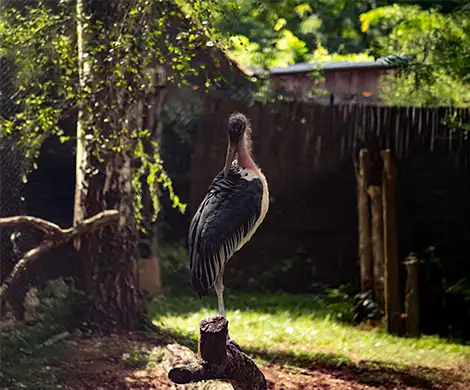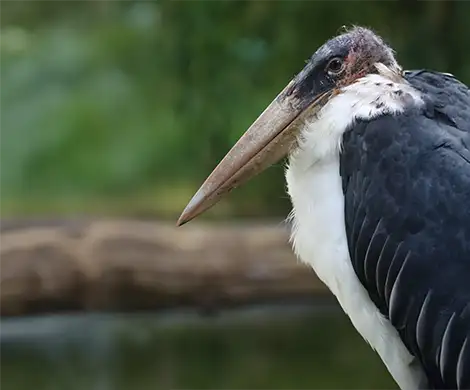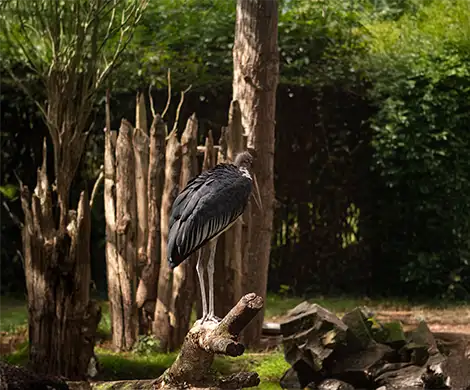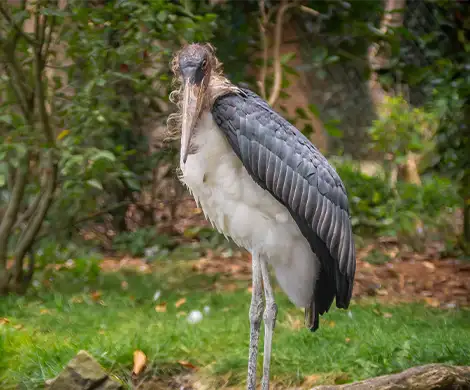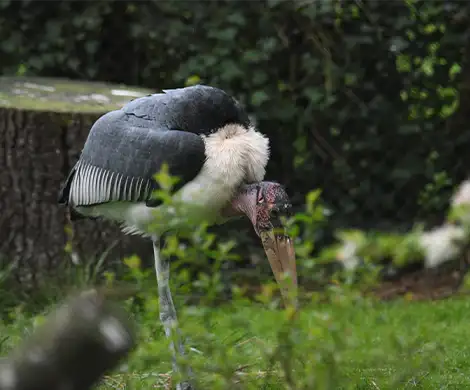

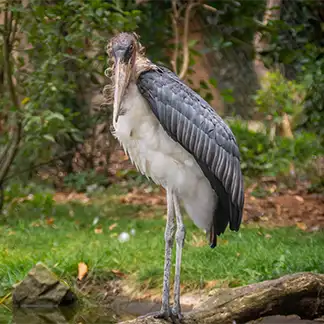
Marabou stork
Statut U.I.C.N
Union Internationale pour la Conservation de la Nature

- lc Préoccupation mineure
- nt Quasi menacé
- vu Vulnérable
- en En danger
- cr En danger critique
- ew Éteint dans la nature
- ex Éteint
Carte d'identité

- Classe :
- Birds
- Ordre :
- Ciconiiformes
- Famille :
- Ciconiidae
- Genre :
- Leptoptilos
- Espèce :
- crumeniferus

- Taille moyenne
- About 1.5 m
- Poids
- 9 kg on average

- Gestation
- Incubation: about 30 days
1 to 2 eggs per clutch - Habitat
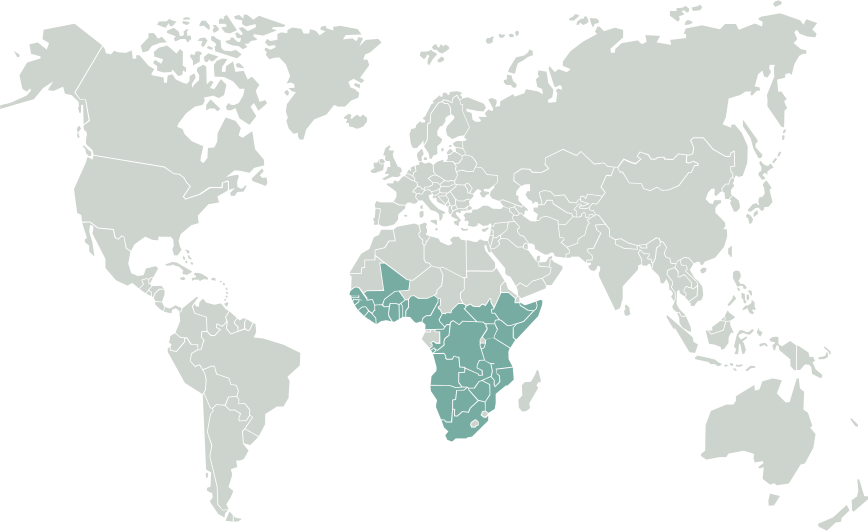
- Marshes, shallow lakes, flooded grasslands and open savannahs

- Régime
- Scavenger
Nature's dustman
The marabou feeds on carrion but also on insects, small animals and organic waste. By making carcasses disappear, it helps to “clean up” its environment.
Threats and conservation
The marabou stork is threatened by habitat destruction, pollution and disturbance of its nesting sites. To protect it, wetlands and savannahs are preserved, breeding sites are safeguarded, and the species is present in several protected areas.
Fun fact
The marabou has a pouch of skin beneath its bill, known as the gular sac. It serves mainly for display and communication, not for storing food.