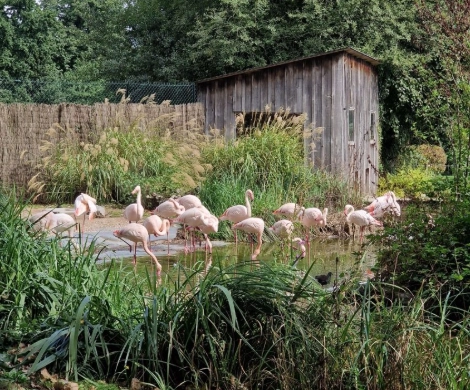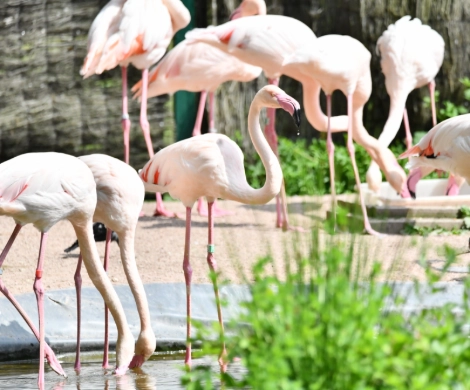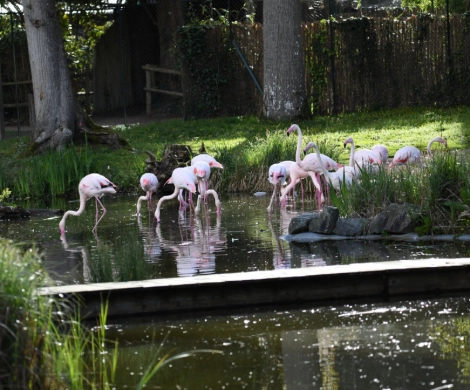

Greater flamingo
Statut U.I.C.N
Union Internationale pour la Conservation de la Nature

- lc Préoccupation mineure
- nt Quasi menacé
- vu Vulnérable
- en En danger
- cr En danger critique
- ew Éteint dans la nature
- ex Éteint
Carte d'identité

- Classe :
- Birds
- Ordre :
- Phoenicopteriformes
- Famille :
- Phoenicopteridae
- Genre :
- Phoenicopterus
- Espèce :
- roseus

- Taille moyenne
- 80 to 150 cm
- Poids
- 1.9 to 3 kg

- Gestation
- Incubation: 27 to 31 days
One egg per clutch - Habitat
- Shallow lakes, lagoons, salt marshes and estuaries

- Régime
- Molluscivore
Elegance in pink
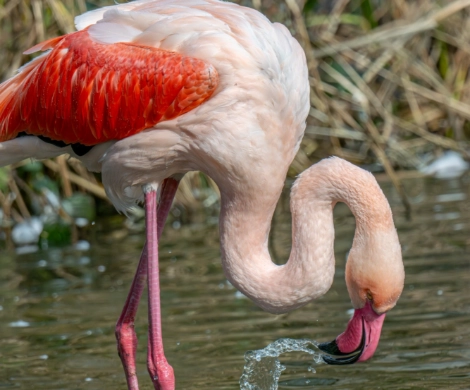
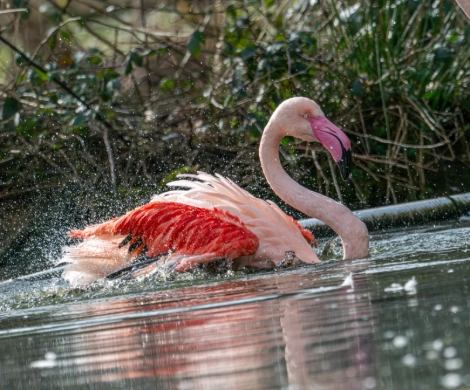
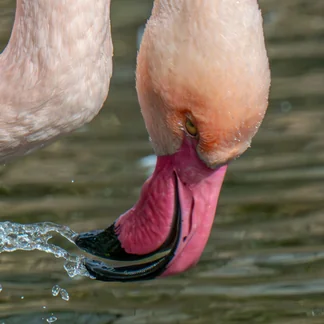
By filtering water to feed, the greater flamingo helps keep wetlands in balance by regulating certain populations of aquatic organisms and promoting nutrient recycling.
Threats and conservation
The greater flamingo is threatened by habitat destruction, water pollution and human disturbance. To protect it, lakes, lagoons and marshes are being preserved and restored, and discharges of waste and toxic products are being limited. Raising awareness among local communities and involving them, along with population studies and monitoring, complete these efforts.
Fun fact
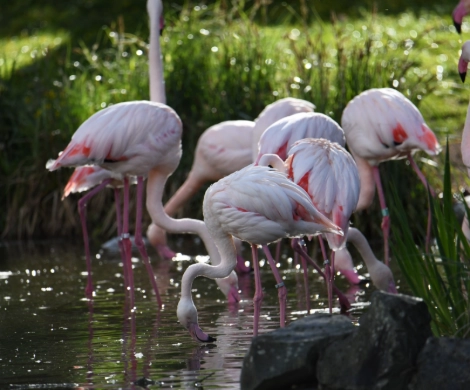
Its bill works as a natural filter. Head upside down in the water, it sifts the mud to capture the tiny organisms it feeds on.