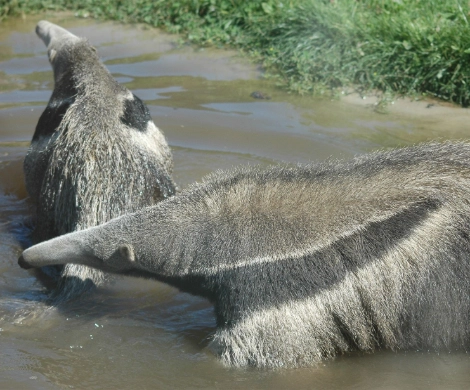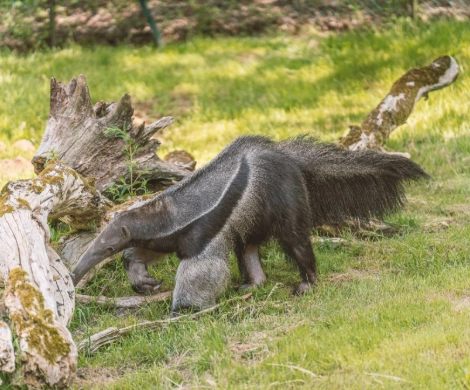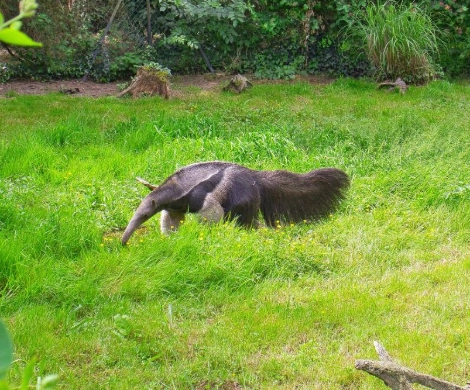

Giant anteater
Statut U.I.C.N
Union Internationale pour la Conservation de la Nature

- lc Préoccupation mineure
- nt Quasi menacé
- vu Vulnérable
- en En danger
- cr En danger critique
- ew Éteint dans la nature
- ex Éteint
Carte d'identité

- Classe :
- Mammals
- Ordre :
- Pilosa
- Famille :
- Myrmecophagidae
- Genre :
- Myrmecophaga
- Espèce :
- tridactyla

- Taille moyenne
- 1 to 1.1 m (snout up to 45 cm)
- Poids
- 18 to 39 kg

- Gestation
- About 184 days
One baby per birth - Habitat
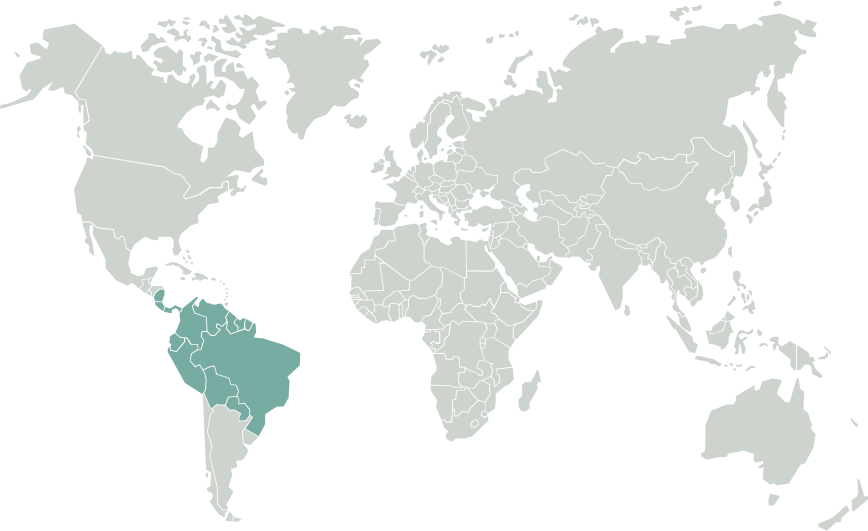
- Forests, marshes and grasslands

- Régime
- Insectivore
The ant specialist
The anteater has no teeth. It swallows its prey whole and grinds it up in its stomach using powerful muscles. With a tongue nearly 60 cm long, it can catch up to 30,000 ants and termites every day.
Threats and conservation
The giant anteater is threatened by habitat destruction, hunting, poaching and forest fires. To protect it, forests and savannahs are being preserved and restored, and laws and controls against illegal trade have been strengthened. Population studies and monitoring, along with raising awareness among and educating local communities, complete these efforts.
Fun fact
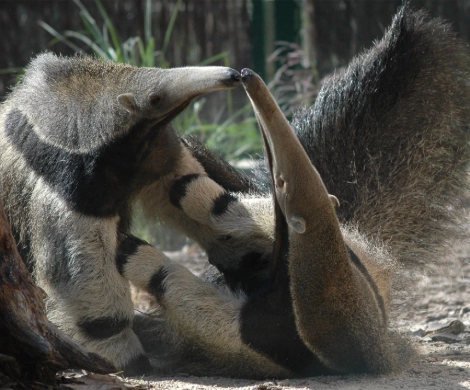
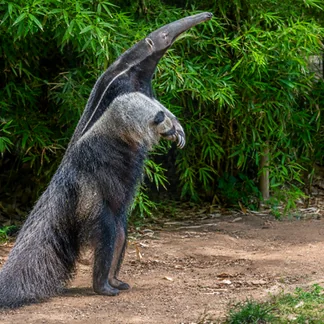
The giant anteater can defend itself with its huge claws. Reared up on its hind legs, it can face down large predators such as the jaguar.