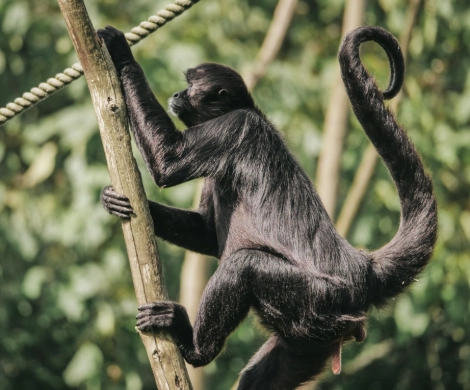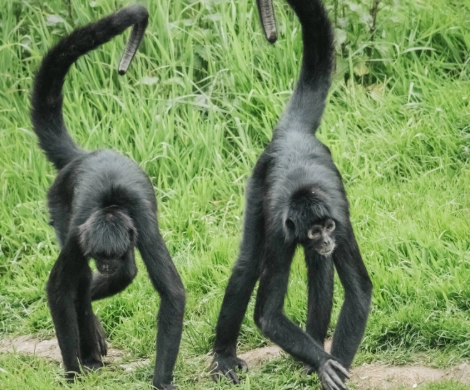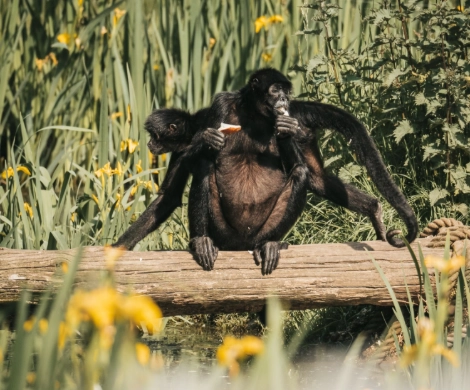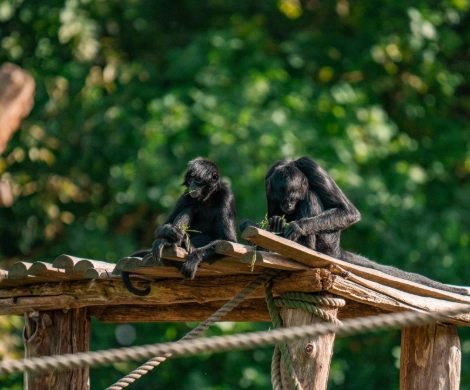

Colombian spider monkey
Statut U.I.C.N
Union Internationale pour la Conservation de la Nature

- lc Préoccupation mineure
- nt Quasi menacé
- vu Vulnérable
- en En danger
- cr En danger critique
- ew Éteint dans la nature
- ex Éteint
Carte d'identité

- Classe :
- Mammals
- Ordre :
- Primates
- Famille :
- Atelidae
- Genre :
- Ateles
- Espèce :
- fusciceps

- Taille moyenne
- 39 to 53 cm (tail 71 to 85 cm)
- Poids
- 5 to 8 kg

- Gestation
- About 227 days
One baby per birth - Habitat
- Lowland tropical rainforests

- Régime
- Folivore, frugivore
The gardener of the forests
True to its nickname, the spider monkey spreads the seeds of the fruit it eats and helps renew the rainforest. Spider monkeys practise “fission” to feed: they split up to look for food during the day and regroup at night.
Threats and conservation
The Colombian spider monkey is threatened by deforestation, hunting, forest fires and human disturbance. To protect it, forests and savannahs are being protected and restored, and corridors are being created to keep forests connected. Population studies and monitoring, along with raising awareness among local communities and involving them, complete these efforts.
Fun fact
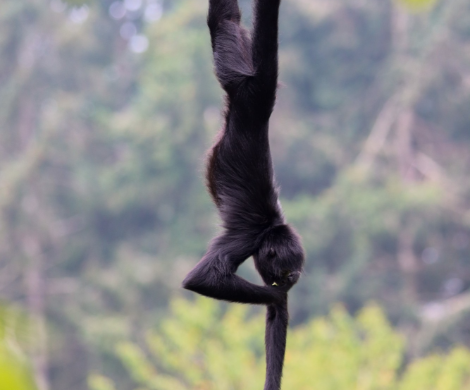
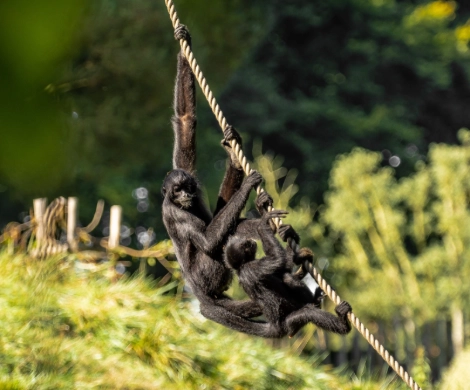
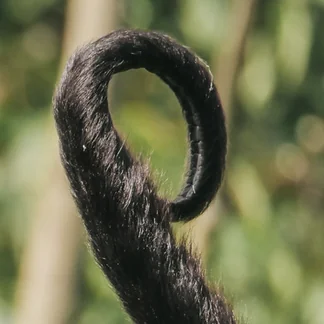
Its tail is so powerful that it acts as a genuine fifth hand! It lets the spider monkey move through the trees with exceptional agility.